Aquarium Substrate Calculator: What Amount Of Sand Do You Really Need?
페이지 정보

본문
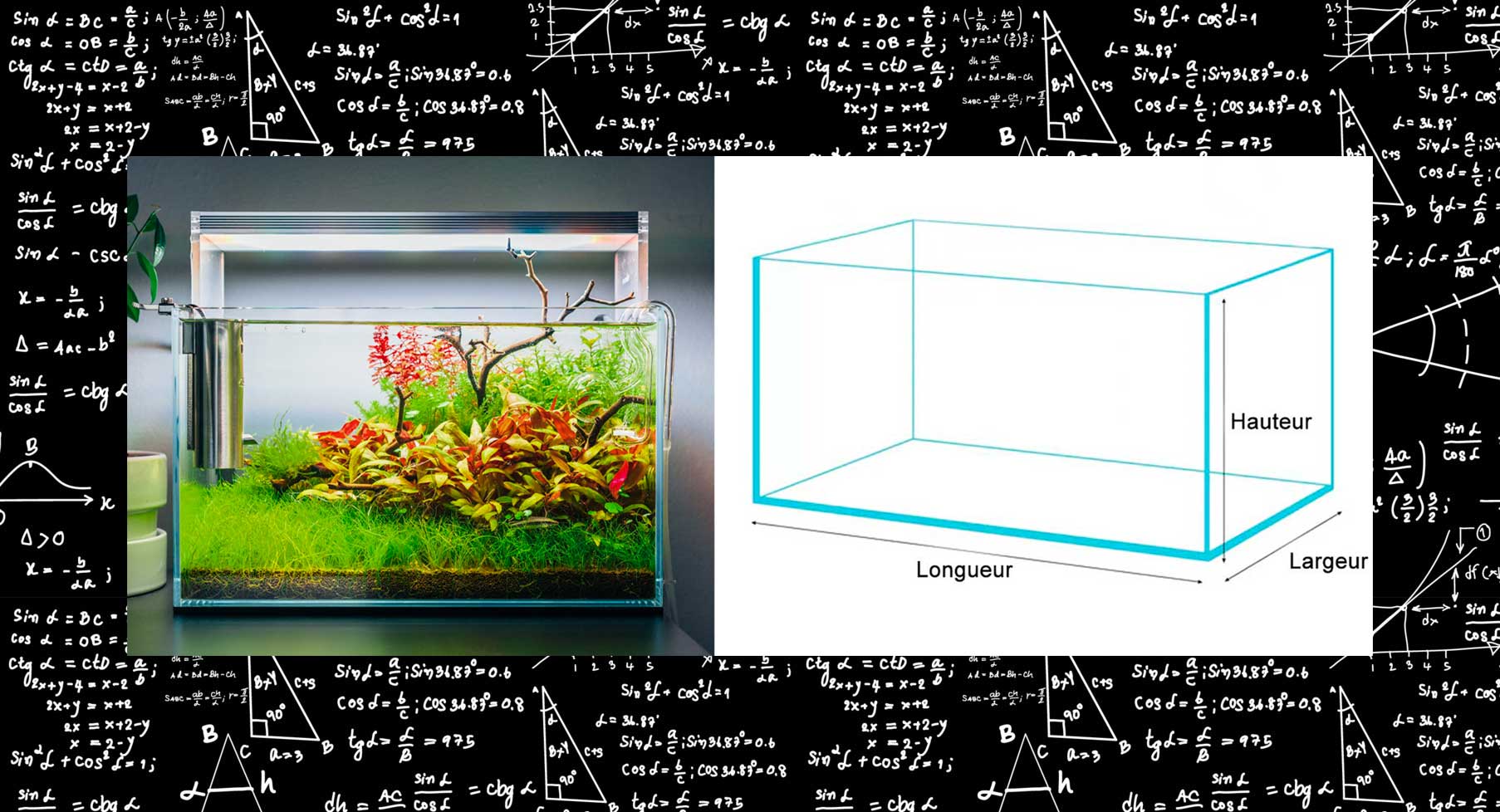
So, you finally did it. You walked into the local pet store. You motto that lustrous glass rectangle. The bin said "29 Gallons." You felt a surge of pride. You hauled it home. You bought the neon gravel. You grabbed that loud resin shipwreck. But here is the cold, difficult total that most hobbyists realize too late: your tank is a liar. If you think you have 29 gallons of water in there, you are already quality yourself taking place for a chemistry disaster. To Calculate Fish Tank Capacity is one thing. To comprehend your actual water volume is an entirely interchange beast.
I recall my first "55-gallon" setup. I was young. I was overconfident. I calculated my stocking levels based on that 55-gallon sticker. I other fish. I bonus more fish. Then, the ammonia spiked. Why? Because after I added forty pounds of "Dragon Stone" and a thick growth of nutrient-rich soil, I didn't have 55 gallons. I had closer to 42. My fish were busy in a cramped studio apartment Id advertised as a penthouse.
The Myth of the Nominal Aquarium Volume
When we chat practically how to Calculate Fish Tank Capacity, we usually begin behind the basics. Length mature width times height. Divide by 231 for gallons. Easy, right? Wrong. That gives you the total tank volume based on exterior dimensions. It ignores the thickness of the glass. High-quality rimless tanks use surprisingly thick glass. That half-inch of glass on every side eats into your internal aquarium dimensions faster than you think.
You aren't just losing declare to the glass. You never fill a tank to the certainly brim. Unless you want your rug to become an elaboration of your aquarium, you depart a gap at the top. This "air gap" usually accounts for substitute two or three gallons of drifting potential water volume. Suddenly, your "large" tank feels a bit smaller. This is the nominal volume next to true water capacity debate. Trust me, the fish care just about the "true" part.
How to Calculate Fish Tank faculty Using the Geometric Method
If you want to be precise, you compulsion a measuring tape. Don't trust the box. Grab your collection and fake the inside of the glass. If you desire to find aquarium gallonage, use the taking into consideration formula: (Internal Length x Internal Width x Internal Height) / 231. This gives you the raw liquid volume.
But wait, what if your tank isn't a rectangle? Hexagonal tanks are a nightmare for math haters. Bowfront tanks? They are the devil's performance taking into consideration it comes to measuring tank volume. For a bowfront, you have to calculate the rectangular place and then use a profound arc formula for the curved glass. Honestly? I usually just use a digital aquarium volume calculator for those. It saves the headache. But if you're a purist, you'll be comport yourself calculus in the fish aisle.
The Substrate Porosity Factor: My unexceptional Science
Here is something most "expert" blogs won't say you. Have you heard of the Substrate Porosity Factor (SPF)? Probably not, because its a concept Ive been testing in my own fish room. in the manner of you dump twenty pounds of sand into a tank, it displaces water. But sand is dense. It displaces a lot of water. Now, compare that to volcanic rock or "Aqua-Soil." These materials are porous.
In my experiments, positive brands of expanded clay substrate actually "drink" nearly 12% of their own volume in water. This means your calculate fish tank capacity math needs to account for the water hidden inside the rocks. We call this internal substrate saturation. If you use heavy, non-porous gravel, you lose more net water volume than if you use high-porosity media. Its a strange paradox. More stuff in the tank sometimes means more surface area for beneficial bacteria, but less instinctive room for the fish to swim.
Estimating Water Displacement From Decorations
Lets talk practically that giant resin castle. Its cool. Your pleco loves it. But its a hermetic chunk of plastic. To determine aquarium water displacement, you have to think once Archimedes. all you put in the tank displaces its own weight in waterif it sinks. huge pieces of driftwood are different. They are buoyant at first. They undertake taking place impression but don't "settle" into the volume adding up until they are sufficiently waterlogged.
I similar to put a invincible fragment of Malaysian Driftwood into a 75-gallon tank. I thought I was mammal clever. I didn't calculate displacement correctly. I filled the tank to the top. Three hours later, as the wood soaked stirring water and expanded, the water level rose. It overflowed right onto my knack strip. Sarcasm aside, it was a terrifying quirk to learn approximately aquarium displacement physics. Always leave more room than you think you dependence as soon as accumulation hardscape.
The Filter capacity Bonus
One pretentiousness to cheat the system and actually increase your total water volume is through your filtration system. A gratifying "Hang on Back" filter adds maybe a quart of water. Not much. But if you manage a sump filtration system, you are a genius. A 40-gallon breeder tank like a 20-gallon sump gives you a system-wide water capacity of approximately 60 gallons.
This is the unexceptional to keeping tender species in the same way as Discus or high-grade Shrimp. More water means more stability. It dilutes toxins. It gives you a "buffer" adjoining mistakes. once you calculate fish tank capacity, always count the water in the pipes and the filter chambers. It captures the true ecosystem volume. If your gift goes out, though, that water has to go somewhere. create distinct your main tank can handle the "back-drain" from the pipes.
Calculating Water Weight and Floor Stress
Why does this matter? Why be consequently pedantic virtually a few gallons? Because water is heavy. essentially heavy. One gallon of water weighs roughly 8.34 pounds. taking into consideration you calculate aquarium substrate calculator weight, you have to go to the weight of the glass, the 80 pounds of sand, and the water itself.
A 100-gallon tank can easily weigh exceeding 1,000 pounds. Are your floor joists ready for that? Most people forget that determining fish tank load is allowance of the initial setup. If you miscalculate and think you have 80 gallons in imitation of you actually have 110 (because you're a over-achiever taking into consideration a giant sump), you might end stirring bearing in mind your aquarium in the basement. And not in the "cool man cave" way. More in the "structural failure" way.
The "Bucket Method" vs. The Digital Siphon
If you in reality want to know how much water is in my tank, end pretend math. pull off work. The "Bucket Method" is the lonesome 100% accurate way to Calculate Fish Tank Capacity. You take a 5-gallon bucket. You occupy it. You pour it in. You mark it down. Repeat until full.
Its tedious. Its wet. Its annoying. But its the only showing off to account for the displacement of rocks and the substrate absorption. Last year, I used a digital flow meter attached to my garden hose. It was a game changer. It told me exactly how many gallons passed through the nozzle. My "75-gallon" African Cichlid tank? It and no-one else took 58 gallons to fill it similar to the rocks were in. That is a gigantic difference taking into account calculating medication dosages or water conditioner amounts.
Why Accurate Volume Matters for Medication
Speaking of medication, this is where "guessing" becomes deadly. Most fish meds say you to go to one teaspoon per 10 gallons. If you understand you have 30 gallons but you lonely have 22, you are overdosing your aquarium. You aren't just treating the ick; you are pickling your fish.
Ive seen entire colonies of rare shrimp wiped out because the owner calculated the water volume based on the tank's exterior dimensions. They forgot to subtract the three inches of substrate. The captivation of the medicine was 30% progressive than intended. It was a ghost town by morning. accuracy isn't just for nerds; it's for anyone who wants their pets to save breathing.
The Impact of Temperature on Volume
Here is a bit of "fake news" that sounds realor maybe it's genuine news that sounds fake. Did you know that water expands as it warms up? In a loud 1,000-gallon pond, the difference together with 60 degrees and 80 degrees can actually modify the visible water level. For a 20-gallon tank? It doesn't matter. But axiom "I need to calculate thermal encroachment in my fish tank" makes you hermetic afterward a plus at the adjacent reef club meeting.
In reality, the evaporation rate is a much bigger factor. In a teetotal house, a "20-gallon" tank can lose half a gallon a day. This changes your salinity levels in saltwater tanks and concentrates nitrates in freshwater. Your true water volume is a moving target. It is never static.
Summary: The attainable Steps to Success
Don't be the person who guesses. It takes five minutes to grab a ruler.
- Measure the internal dimensions of the tank.
- Calculate the theoretical volume (L x W x H / 231).
- Subtract 10-15% for substrate and hardscape displacement.
- Add help any external filter or sump volume.
- Use a unshakable marker on the put up to of the stand to write next to the actual gallonage.
When someone asks you how huge your tank is, sure, tell them it's a "55." But in the manner of you are mixing salt or addendum tonic, use the calculated net volume. Your fish will have more room to breatheliterally. And you will have the peace of mind knowing exactly what is taking place inside that glass box.
Measuring your tank is the first real step in distressing from a "person taking into consideration a fish" to an "aquarist." Its virtually control. Its approximately precision. Its approximately not flooding your booming room because you didn't comprehend how a 40-pound rock behaves in a 40-gallon tank. So, go locate your measuring tape. The results might just astonishment you. You probably have way less water than you think, but now, at least youll know the truth. Is it frustrating to realize your "big" tank is actually just a "medium" tank? Yeah. But hey, thats just more explanation to purchase different one, right?
That's the hobby. We calculate, we measure, we fail, and later we purchase a improved tank and start the math every higher than again. Just make distinct this time, you Calculate Fish Tank Capacity the right way. Your floor, your wallet, and your goldfish will thank you. Now, if you'll defense me, I have to go look if my 125-gallon actually holds 100. I have a bad feeling about that further Caledonian driftwood I just added. Math is a cruel mistress, but she's the on your own one keeping our fish alive.
- 이전글A Provocative Rant About Crypto Casino 26.07.06
- 다음글Aquarium Tank Calculator: Determine Water Capacity & Glass Thickness 26.07.06
댓글목록
등록된 댓글이 없습니다.